Designing an efficient warehouse storage layout using racking systems is the backbone of any successful logistics operation. A well-planned layout does more than just store boxes; it streamlines your entire workflow, reduces labour costs, and maximizes every square inch of your facility. When you organize your space correctly, you turn a chaotic room into a high-speed engine that drives your business forward.
Racking systems are the secret ingredient to this efficiency. Instead of leaving items on the floor or in messy piles, these systems allow you to stack products safely and strategically. By choosing the right setup, you can improve inventory accuracy and ensure that your team can find and move products in record time. In this guide, we will walk you through everything you need to know to optimize your space like a pro.
What Is a Warehouse Storage Layout?
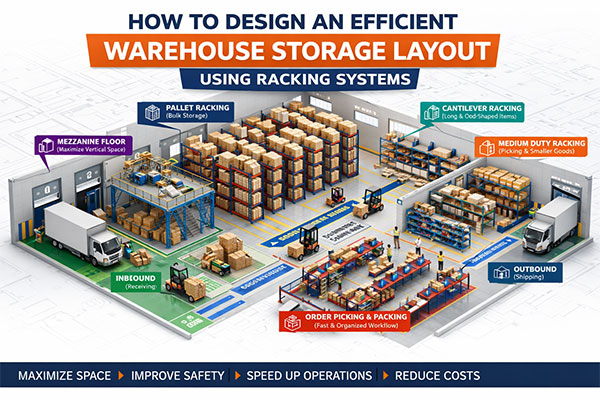
A warehouse storage layout is a physical map or blueprint of how goods, equipment, and people move within a warehouse. It defines where products are kept, how aisles are positioned, and where loading docks are located. Think of it like the floor plan of a grocery store; if the milk is easy to find and the aisles are wide enough for carts, the store runs smoothly.
In a professional setting, a layout focuses on flow. You want a “straight-line” or “U-shaped” flow where items come in one door, get stored logically, and move out the other side without getting stuck in traffic jams.
Why Warehouse Storage Layout Using Racking Systems Is Important
Using a warehouse storage layout using racking systems is essential for any growing business. Without a proper system, you are essentially wasting money on empty air. Here is why it matters:
- Better Warehouse Space Utilization: Most warehouses have high ceilings. Racking systems allow you to store products vertically, potentially doubling or tripling your storage capacity without moving to a larger building.
- Faster Inventory Access: When everything has a specific “home” on a rack, workers don’t waste time searching for lost pallets. This speeds up picking and packing.
- Improved Safety: Stacking boxes on top of each other on the floor is a tipping hazard. Industrial racks are engineered to hold specific weights, keeping your employees and your inventory safe.
- Organized Product Storage: You can categorize products by size, weight, or how fast they sell. This level of organization prevents “inventory shrinkage” (lost or damaged goods).
Types of Racking Systems Used in Warehouse Storage Layout
Choosing the right hardware is the most critical part of your warehouse storage layout using racking systems. Different products require different support.
Racking System Comparison Table
| Rack Type | Best For | Load Capacity | Warehouse Use |
|---|---|---|---|
| Selective | General storage & many SKUs | Medium to High | Retail & Distribution |
| Drive-In | High volume, same product | High | Cold Storage / Food |
| Cantilever | Long or awkward items | Very High | Construction / Timber |
| Multi-Tier | Small parts & manual picking | Low to Medium | E-commerce / Pharma |
Steps to Design an Efficient Warehouse Storage Layout Using Racking Systems
Designing your layout requires a step-by-step approach. You cannot simply “wing it” when dealing with heavy machinery and thousands of pounds of inventory.
Analyze Warehouse Space
Understand Product Size and Weight
Select the Right Racking System
Plan Aisles and Forklift Movement
Optimize Vertical Storage Space
Follow Warehouse Safety Standards
Industries That Use Warehouse Storage Racking Systems
Almost every industry that handles physical goods relies on a solid warehouse storage layout using racking systems.
Tips to Improve Warehouse Storage Layout Efficiency
- Use the 80/20 Rule: Place your top 20% most popular items near the shipping docks to reduce travel time.
- Label Everything: Use clear, large signs for every aisle and rack level so new employees can navigate easily.
- Audit Regularly: Your needs change. Every six months, check if your “fast movers” have changed and move your racks accordingly.
- Invest in Lighting: A dark warehouse is a dangerous warehouse. Bright LED lighting helps drivers see rack levels clearly.
- Cross-Docking: If some items don’t need to be stored, create a “cross-docking” zone where they move directly from the receiving dock to the shipping dock.
FAQs
What is a warehouse storage layout?
It is the strategic arrangement of storage systems, aisles, and work areas within a warehouse to maximize space and improve the flow of goods.
Why are racking systems important in warehouses?
They allow for vertical storage, which increases capacity, protects goods from damage, and makes it much safer for employees to move inventory.
How do racking systems improve warehouse efficiency?
They reduce the time workers spend searching for items, allow for better organization, and create clear paths for forklifts to move without obstruction.
Which racking system is best for warehouse storage?
It depends on your needs. Selective racking is best for variety, while Drive-In racking is best for high volumes of a single product type.
How to maximize warehouse space using racking systems?
Utilize vertical space by building up toward the ceiling and choose a racking type (like VNA – Very Narrow Aisle) that minimizes the width of your hallways.
Conclusion
Building a warehouse storage layout using racking systems is one of the smartest investments a business can make. By focusing on space utilization, safety, and flow, you can lower your operating costs and fulfill customer orders faster than ever before. Don’t let your warehouse be a source of stress—turn it into a competitive advantage.