Selective vs Drive-In Racking
Choosing the right storage racking system is one of the biggest decisions for any warehouse. Two of the most popular choices in India are selective pallet racking and drive-in racking. Both are good, but they fit very different needs. Picking the wrong one wastes space, time, and money.
Selective racking is the most common racking system. It is simple, flexible, and gives you direct access to every pallet. Drive-in racking is the choice when you need to store the maximum number of pallets in the minimum floor area. Many warehouses use one or the other, but some use both together.
In this guide, we compare selective pallet racking vs drive-in racking in simple words. We will look at how they work, their benefits, problems they solve, price in India, and which one is the right fit for your business.
What Is Selective Pallet Racking?
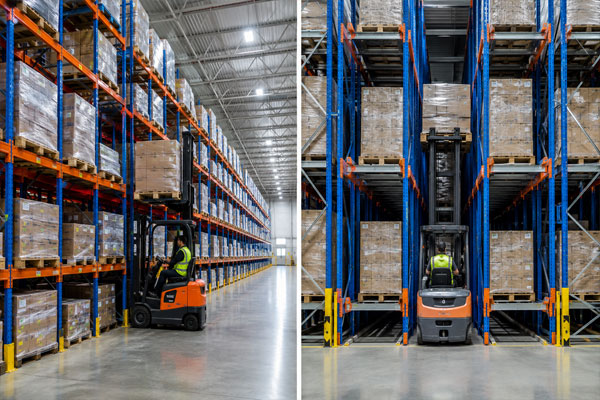
Selective pallet racking is a storage system made of upright frames and horizontal beams. Every pallet sits in its own bay, and a forklift can pull out any pallet directly from the aisle without touching the others. It is the most flexible racking system and the most common in India.
It works best for warehouses with many SKUs and medium-to-fast moving goods. You get 100% access to every pallet at all times.
What Is Drive-In Racking?
Drive-in racking is a high-density storage system. The forklift drives into the rack lane on rails and places pallets one behind the other. It is a deep-lane system, designed to hold many pallets in a small floor area. It uses LIFO (Last In, First Out) stock rotation.
It works best for warehouses with few SKUs but many pallets of each, like cold storage, food, and bulk goods warehouses.
Key Differences: Selective Pallet Racking vs Drive-In Racking
Let us compare the two systems across the features that matter most.
| Feature | Selective Pallet Racking | Drive-In Racking |
|---|---|---|
| Access to Pallets | 100% direct access (FIFO or LIFO) | Last pallet in, first out (LIFO) |
| Storage Density | Medium (needs more aisles) | Very High (fewer aisles, deep lanes) |
| Number of SKUs | Many (hundreds, thousands) | Few (usually 5–20) |
| Floor Space Use | Lower (40–50% storage efficiency) | Higher (60–75% storage efficiency) |
| Loading Speed | Fast (no need to enter rack) | Slower (driver must enter lane) |
| Best For | FMCG, retail, e-commerce, pharma | Cold storage, food, bulk goods |
| Stock Counting | Easy (every pallet visible) | Hard (deep lanes) |
| Price per Sq. Ft. | ₹650 – ₹1,200 | ₹750 – ₹1,400 |
| Cost per Pallet Stored | Higher | Lower |
| Damage Risk | Lower (forklift stays outside) | Higher (forklift enters rack) |
Benefits of Selective Pallet Racking
- Direct access to every pallet at any time, no need to move others.
- Flexible beam heights can be changed to fit different pallet sizes.
- Easy to install, expand, or reconfigure as your business grows.
- Works with any standard forklift — no special training needed.
- Best for many SKUs and fast order picking.
- Lower damage risk because the forklift stays outside the rack.
- Highly versatile, making it an ideal engineering product storage rack for heavy and diverse industrial components.
Benefits of Drive-In Racking
- Very high storage density — up to 75% more pallets than selective racking.
- Less floor space wasted on aisles.
- Lower cost per pallet stored in the long run.
- Great for cold storage — less air to cool, lower power bills.
- Custom lane depths from 2 pallets to 10+ pallets.
Problems Solved by Each System
Selective Pallet Racking Solves:
- Slow picking — workers waste time moving pallets to reach the one they need.
- Stock rotation issues — old stock sits at the back.
- Frequent stock audits — every pallet is visible and easy to count.
- Changing SKU mix — beam heights can be adjusted anytime.
Drive-In Racking Solves:
- Limited floor space — more pallets in the same area.
- High cold storage power bills — tighter storage, less air to cool.
- Bulk goods sitting on the floor — pallets go vertical and deep.
- Low SKU variety — perfect when you only have a few products in bulk.
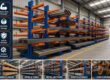
Note: If you are dealing with long, bulky, or irregularly shaped goods, a cantilever rack solves storage problems that standard pallet racks cannot handle.
When to Use Selective Pallet Racking
Choose selective pallet racking if:
- You have many SKUs (more than 50–100).
- You need fast picking and quick access to every pallet.
- You follow FIFO (First In, First Out) stock rotation.
- Your products change often or have varying pallet sizes.
- You want a flexible system that is easy to expand.
- You need a reliable heavy duty pallet rack to safely store varied products with heavy load capacities.
When to Use Drive-In Racking
Choose drive-in racking if:
- You have a small number of SKUs in very large quantities.
- You follow LIFO (Last In, First Out) stock rotation.
- Floor space is limited and you need maximum storage density.
- You run a cold storage, food, beverage, or bulk goods warehouse.
- You want to lower the cost per pallet stored.
- If floor space is limited but you cannot use LIFO stock rotation, a multi-tier racking system might be a better high-density alternative.
Price Comparison in India
Price depends on height, load, and depth. Here is a simple guide.
| System | Price per Sq. Ft. | Best Cost Saving |
|---|---|---|
| Selective Pallet Racking | ₹650 – ₹1,200 | Lower upfront cost |
| Drive-In Racking | ₹750 – ₹1,400 | Lower cost per pallet stored |
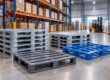
Keep in mind that the final price of your warehouse rack setup will also depend on layout complexities and added accessories, such as the specific metal pallets you choose to use.
Conclusion
There is no single answer. The better racking system depends on your business.
- If you want flexibility, fast picking, and many SKUs, go with selective pallet racking.
- If you want maximum density and bulk storage, go with drive-in racking.
- If your warehouse has both kinds of goods, use a hybrid design with both systems.
Before you decide, contact our racking experts. A good supplier will study your SKU count, throughput, and budget before suggesting the right design. Ready to upgrade your warehouse? Request a side-by-side quote today, view our completed projects for inspiration, or explore more racking guides to make an informed decision.
Frequently Asked Questions (FAQs)
Selective pallet racking is better for warehouses with many SKUs that need fast picking. Drive-in racking is better for warehouses with few SKUs and many pallets of each, where high-density storage is the goal.
Selective racking gives direct access to every pallet. Drive-in racking stores pallets deep in lanes, so only the last pallet in can be reached first (LIFO).
Selective pallet racking is cheaper per square foot. But drive-in racking can be cheaper per pallet stored because it holds more pallets in the same floor area.
Drive-in racking is best for cold storage. It packs more pallets in less space, which lowers the volume of air to cool and saves electricity.
Yes, many warehouses use a mix. Fast-moving SKUs go in selective racking, and slow-moving bulk SKUs go in drive-in racking.
Selective pallet racking is faster and easier to install. Drive-in racking needs careful alignment of lanes and rails, so it takes a bit longer.
Both have a similar life of 15–25 years if maintained well. Drive-in racking may need more frequent safety checks because forklifts operate inside the rack.