Selective Pallet Racking System Guide
A selective pallet racking system is the most common type of warehouse racking used across India. It is the first choice for businesses that store many different products and need to reach any pallet at any time. If you walk into almost any distribution center, retail warehouse, or e-commerce fulfillment center, you will see selective racking in use.
The reason it is so popular is simple — it gives you direct access to every single pallet. A forklift can drive into the aisle, lift a pallet, and pull it out without moving any other pallet. This makes picking fast, errors low, and stock checks easy. For warehouses in Ahmedabad, Mumbai, Delhi, and other growing cities, selective pallet racking is the starting point of good storage design.
In this guide, we will explain how a selective pallet racking system works, its main benefits, common applications, and the price you can expect in Ahmedabad. We will keep the language simple so that a warehouse manager, business owner, or student can all understand it.
What Is a Selective Pallet Racking System?
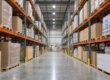
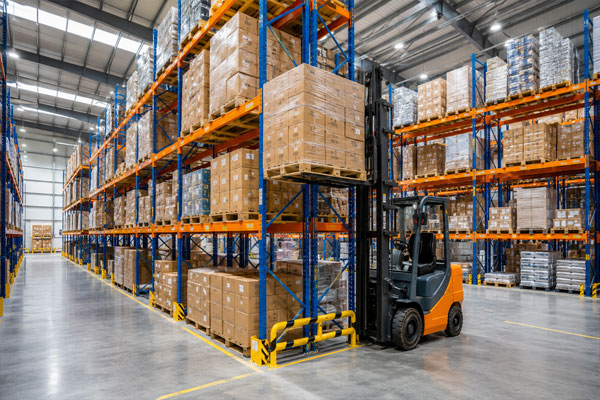
A selective pallet racking system is a storage system made of upright frames and horizontal beams. Pallets are placed on the beams, and forklifts load and unload them from the front. Each pallet sits in its own bay, so you can pick any one of them without disturbing the others.
This is the opposite of high-density systems like drive-in racking, where pallets are stored deep and you have to move the front pallets to reach the back ones. With selective racking, the trade-off is simple: you use more floor space, but you get full access to every SKU.
How Does a Selective Pallet Racking System Work?
The system is made of three main parts. Let us explain each one in simple words.
- Upright Frames: These are the vertical columns that stand on the floor. They hold the whole weight of the rack. They are bolted to the floor for safety.
- Beams: These are the horizontal bars that hold the pallets. They hook into the upright frames and can be moved up or down to change the shelf height.
- Row Spacers & Frame Protectors: These are safety parts that keep frames straight and protect them from forklift damage.
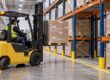
A forklift drives into the aisle, lifts the pallet from the floor, and places it on two beams at the right level. The pallet sits there until it is needed. When a worker wants that pallet, the forklift takes it out directly. The whole process takes only a few minutes.
Key Benefits of Selective Pallet Racking System
There are many reasons why warehouses choose selective pallet racking. Here are the main benefits:
- Direct Access to Every Pallet: You can reach any pallet at any time without moving others. This is great for fast-moving goods.
- Easy to Install: The parts are bolted together. A small team can install a full bay in a few hours.
- Adjustable Beam Heights: You can move the beams up or down based on the size of your pallets.
- Works with Any Forklift: You do not need a special forklift. Standard counterbalance or reach trucks work fine.
- Lower Cost: It is cheaper than high-density systems like drive-in or push-back racking.
- Easy Stock Counting: Since every pallet is visible, physical stock checks are simple and fast.
- Good for Many SKUs: Perfect for warehouses that store hundreds or thousands of different products.
Common Applications of Selective Pallet Racking
Selective pallet racking is used in many industries. Here are the most common applications:
- FMCG and Retail Warehouses: For storing groceries, packaged food, and household goods with many SKUs.
- E-commerce Fulfillment Centers: For fast order picking where every product must be reached quickly.
- Pharmaceutical Warehouses: For medicines and medical supplies that need strict stock rotation.
- Cold Storage Facilities: For temperature-controlled storage of food, dairy, and pharma products.
- Manufacturing Plants: For raw materials, work-in-progress, and finished goods storage.
- Automobile Spare Parts Warehouses: For thousands of small parts that need quick access.
Problems Solved by Selective Pallet Racking
Many warehouses face the same problems. Here is how selective racking solves them:
- Problem: Workers waste time moving pallets to reach the one they need.
Solution: Every pallet is on its own bay, so the forklift pulls it out directly. - Problem: Stock rotation is hard, and old stock stays on the shelf.
Solution: With FIFO lanes or face picking, old stock is moved out first. - Problem: Warehouse space looks messy and pallets lie on the floor.
Solution: Pallets are stored vertically, freeing the floor for forklift movement. - Problem: Safety risks from stacked pallets on the floor.
Solution: Engineered racking keeps pallets off the floor and stable.
Selective Pallet Racking vs Other Racking Systems
It helps to compare selective racking with other common systems before you decide.
| Feature | Selective Racking | Drive-In Racking | Pallet Flow Racking |
|---|---|---|---|
| Access to Pallets | 100% direct access | Last-in, first-out (LIFO) | First-in, first-out (FIFO) |
| Floor Space Usage | Lower (needs more aisles) | High (deep lanes) | High (deep lanes) |
| Best For | Many SKUs, fast picking | Bulk storage, few SKUs | Date-sensitive goods |
| Cost per Sq. Ft. | ₹650 – ₹1,200 | ₹750 – ₹1,400 | ₹1,200 – ₹2,000 |
| Installation Time | Fast | Medium | Slower (has rollers) |
Selective Pallet Racking vs Other Racking Systems
It helps to compare selective racking with other common systems before you decide.
| Feature | Selective Racking | Drive-In Racking | Pallet Flow Racking |
|---|---|---|---|
| Access to Pallets | 100% direct access | Last-in, first-out (LIFO) | First-in, first-out (FIFO) |
| Floor Space Usage | Lower (needs more aisles) | High (deep lanes) | High (deep lanes) |
| Best For | Many SKUs, fast picking | Bulk storage, few SKUs | Date-sensitive goods |
| Cost per Sq. Ft. | ₹650 – ₹1,200 | ₹750 – ₹1,400 | ₹1,200 – ₹2,000 |
| Installation Time | Fast | Medium | Slower (has rollers) |
Price of Selective Pallet Racking in Ahmedabad
The selective pallet racking system price in Ahmedabad depends on the height, load capacity, and finish. Here is a simple price guide:
| Rack Height | Load per Pallet | Approx. Price per Sq. Ft. |
|---|---|---|
| 3 to 4 meters | Up to 500 kg | ₹650 – ₹850 |
| 4 to 6 meters | 500 – 1000 kg | ₹850 – ₹1,050 |
| 6 to 9 meters | 1000 – 1500 kg | ₹1,000 – ₹1,200 |
| Above 9 meters (with safety) | 1500+ kg | ₹1,200+ |
Prices include design, supply, and installation. They do not include civil work or forklift cost.
Conclusion
The selective pallet racking system is the backbone of modern warehousing. It is simple, flexible, and works for almost every industry. Whether you run a small warehouse in Ahmedabad or a large distribution center, selective racking helps you store more, pick faster, and keep workers safe.
If you are planning a new warehouse or upgrading an old one, start with a clear layout, define your SKU count, and choose a racking partner who can guide you with design and safety.
Frequently Asked Questions (FAQs)
A selective pallet racking system is a warehouse storage system where every pallet can be reached directly from the aisle using a forklift. It is the most common type of pallet racking used in warehouses.
The main benefits are direct access to every pallet, easy installation, flexible adjustment, and lower cost compared to high-density systems. It is best for SKUs that need fast picking.
It uses upright frames and horizontal beams to hold pallets. A forklift drives into the aisle, lifts the pallet, and places it on the beams. Each pallet has its own slot.
It is used in retail warehouses, FMCG distribution centers, e-commerce fulfillment centers, cold storage, and manufacturing plants that store many different products.
The price depends on height, load capacity, and brand. On average, selective pallet racking in Ahmedabad costs between ₹650 and ₹1,200 per square foot, including installation.
A small warehouse of 2,000 sq. ft. can be installed in 4–7 days. A larger facility of 20,000 sq. ft. may take 3–4 weeks depending on design.
Yes, when it is designed, tested, and installed properly. Always use rack protectors, anchor bolts, and follow load limits.