Industrial Roll-Out Shelving Rack Applications Benefits and Uses
Storing heavy tools, dies, metal sheets, and large machine parts presents a major challenge for many factories. These items are extremely heavy and awkwardly shaped, making them hard to lift and move. If they are stored on the floor, they waste valuable space and create tripping hazards.
If they are placed on standard static shelves, workers struggle to pull them out safely. This is where an industrial roll-out shelving rack becomes the perfect solution. By allowing the shelves to slide out like drawers, these systems make it safe and easy to store heavy items while maintaining quick, direct access.
What Is an Industrial Roll-Out Shelving Rack?
An industrial roll-out shelving rack is a heavy-duty storage system designed specifically for very heavy and bulky items. Instead of fixed shelves, this system uses individual shelves that slide or roll outward from the main rack frame.
Think of it like a giant, industrial-strength filing cabinet. When a worker needs an item, they simply unlock the specific shelf and roll it out into the aisle. This completely exposes the stored item, allowing workers to easily lift it using a crane, hoist, or forklift.
How Does a Roll-Out Shelving Rack Work?
A roll-out rack system uses several mechanical features to ensure heavy loads move smoothly and safely.
- Sliding shelf mechanism: Each shelf sits on heavy-duty steel tracks with precision steel rollers or bearings. This allows massive weight to glide easily.
- Manual or assisted operation: Most shelves have an ergonomic handle for manual pulling. For extreme weights, a hand-crank or motorized system is used.
- Shelf locking: When pushed in, the shelf locks so it cannot drift open. When pulled out, it locks in the open position so it does not slide back while loading.
- Material loading: Because the shelf extends fully out of the rack, the item is loaded directly from above.
- Forklift or crane access: The open-top access makes it incredibly easy for overhead cranes, hoists, or forklifts to drop items straight onto the shelf.
- Safe shelf extension: The shelves are engineered to pull out safely without tipping, often extending 70% to 100% of their depth.
Main Industrial Roll-Out Shelving Rack Applications
Industrial roll-out shelving rack applications cover a wide range of storage needs. Here are the most common uses across modern industries.
Tool and Die Storage
Heavy metal dies used in stamping or pressing machines are hard to store safely. A tool and die storage rack allows these heavy blocks to be stored safely on multiple levels and easily retrieved by a crane.
Mould Storage
Injection moulding factories use heavy steel moulds that must be changed frequently. Roll-out shelves protect these expensive moulds from damage while saving massive amounts of floor space.
Machine-Part Storage
Large motors, heavy gears, and oversized valves can be difficult to store on static racks. An industrial drawer rack makes it easy to organize these heavy spare parts.
Sheet-Metal Storage
Flat metal sheets are easily scratched or bent if stacked poorly. A sheet metal storage rack with roll-out shelves allows workers to lift single sheets safely without damaging the material underneath.
Maintenance Spare-Part Storage
Maintenance teams need fast access to heavy replacement parts to fix broken factory machines. Roll-out shelves keep these emergency parts organized and ready for a hoist.
Automotive Component Storage
Engine blocks, heavy transmissions, and large casting parts are easily stored and retrieved using heavy-duty roll-out shelves in automotive plants.
Engineering Workshop Storage
Engineering shops have heavy fixtures and metal blocks. A sliding shelf rack keeps the workshop clean, organized, and free from floor clutter.
Heavy Component Storage
Any bulky, heavy, or difficult-to-handle product that requires an overhead hoist for lifting is perfectly suited for a roll-out shelf.
Raw Material Storage
Heavy steel blanks, brass plates, and thick metal blocks can be organized by size and material type on different roll-out shelf levels.
Industries That Use Roll-Out Shelving Systems
Because of its strength and convenience, many different sectors rely on this type of equipment:
- Automotive: For storing heavy vehicle parts, engine blocks, and stamping dies.
- Tool rooms: For organizing dies, jigs, and machining fixtures.
- Engineering: For storing heavy raw materials and finished heavy metal products.
- Metal fabrication: For organizing large sheet metal and heavy metal plates.
- Plastic moulding: For protecting heavy, expensive injection moulds.
- Aerospace: For storing delicate but heavy aircraft engine components safely.
- Maintenance workshops: For keeping large replacement motors and pumps ready to use.
- Warehousing: For creating specific zones for heavy, non-palletized goods.
- Machine manufacturing: For staging heavy parts before final machine assembly.
Benefits of Industrial Roll-Out Shelving Racks
Investing in a roll-out shelving system offers major advantages for any factory or warehouse:
- Easy access: Overhead cranes can drop items directly onto the shelf, eliminating the need to slide heavy goods by hand.
- Better use of vertical space: You can store heavy items high up, freeing up valuable floor space.
- Reduced manual handling: Workers no longer have to push, pull, or drag heavy items, which reduces back injuries.
- Organized storage: Every tool, die, or sheet has a specific home, reducing lost items.
- Faster retrieval: Finding and moving a heavy mould takes minutes instead of hours.
- Improved inventory visibility: You can easily see what is stored on each shelf.
- Storage of awkward items: Items that don’t fit on standard pallets can be stored easily.
- Cleaner working area: Removing items from the floor creates a safer, cleaner factory.
- Custom shelf configurations: You can adjust the distance between shelves to fit your specific items.
Roll-Out Shelving Versus Fixed Shelving
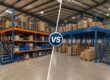
| Feature | Roll-Out Shelving | Fixed Shelving |
|---|---|---|
| Accessibility | 100% accessible from the top. | Only accessible from the front. |
| Space Utilization | High – stores heavy items on multiple levels. | Low for heavy items, usually stored only on the bottom level. |
| Loading Method | Overhead crane, hoist, or forklift. | Forklift or manual lifting. |
| Suitable Materials | Heavy dies, moulds, sheets, motors. | Medium-weight boxes and loose items. |
| Cost | Higher initial investment. | Lower initial cost. |
| Flexibility | Highly adjustable for different material sizes. | Harder to adjust once installed. |
| Safety Requirements | Requires floor anchors and anti-tip locks. | Standard floor anchoring. |
Roll-Out Shelving Versus Pallet Racking
While both hold heavy items, they serve different purposes. Pallet racking is designed for standard, square pallets moved only by forklifts. The goods stay inside the rack framework.
A roll-out rack system, however, is designed for non-palletized, uniquely shaped, and extremely heavy items (like a steel die). Because the shelf pulls out into the aisle, it allows overhead cranes to lift the item straight up, which you cannot do with a standard pallet rack.
Factors to Consider Before Buying a Roll-Out Rack
Before purchasing industrial material storage racks, consider the following points:
- Item dimensions: Measure the length, width, and height of your largest tools or sheets.
- Item weight: You must know the exact weight of your items. Please note that load capacity depends entirely on the rack’s design, construction, and the manufacturer’s specifications. Always verify capacities with the builder.
- Shelf extension: Do you need the shelf to pull out 70% or a full 100% for crane access?
- Available space: Ensure your aisles are wide enough for the shelf to pull out completely.
- Loading method: Decide if you are using a forklift, a bridge crane, or a smaller jib crane.
- Number of shelves: Calculate how many levels you need based on item height.
- Locking mechanism: Ensure the locks are easy for workers to operate with gloves on.
- Floor condition: The concrete floor must be thick and level enough to support the heavy rack.
- Frequency of access: If accessed daily, choose racks with high-quality roller bearings.
- Future storage needs: Buy a rack that can handle slightly heavier items than you currently have, to allow for business growth.
Important Safety Features
Safety is the most critical part of heavy-duty roll-out shelves. A good system must have:
- Individual shelf locks: Prevents shelves from rolling out on their own.
- Anti-tip mechanism: A safety feature that only allows one shelf to be pulled out at a time so the rack does not tip over forward.
- Floor anchoring: Heavy steel bolts that lock the rack securely to the concrete floor.
- Load labels: Clear stickers stating the maximum safe weight for each shelf.
- Shelf stops: Strong metal stops at the back of the track so the shelf cannot be pulled completely off the rack.
- Controlled extension: Prevents the shelf from rolling out too fast.
- Proper spacing: Enough room between racks for safe walking and lifting.
- Regular inspection: Easy visual access to check the rollers and bolts.
Common Mistakes to Avoid
To keep your factory safe, avoid these common mistakes:
- Overloading: Never put more weight on a shelf than the manufacturer’s label allows.
- Opening multiple shelves: Trying to bypass the safety locks and open two heavy shelves at once will cause the rack to tip and crash.
- Ignoring floor condition: Installing heavy racks on cracked or weak concrete is very dangerous.
- Incorrect loading: Dropping heavy items onto the shelf too quickly can break the rollers.
- Using damaged shelves: If a track is bent, stop using the shelf immediately until it is fixed.
- Poor operator training: Allowing untrained workers to use cranes and sliding racks causes accidents.
- Lack of maintenance: Forgetting to clean and check the moving parts causes the system to jam.
Maintenance Tips for Roll-Out Shelving Racks
To ensure long life and smooth operation, follow these simple maintenance steps:
- Keep the steel tracks clean and free from dirt, metal shavings, and dust.
- Lubricate the steel rollers and bearings according to the manufacturer’s instructions.
- Check the locking handles weekly to ensure they snap into place securely.
- Inspect floor anchor bolts to ensure they have not loosened over time.
- Check the shelf alignment. If a shelf is hard to pull, it may be bent or out of alignment.
- Look for signs of structural damage, like cracked welds or dented steel frames.
Can Roll-Out Shelving Racks Be Customized?
Yes, roll-out storage racks can be highly customized. Because every factory is different, manufacturers can change the shelf size to fit extra-long metal sheets or very wide stamping dies. You can choose the exact number of levels you need and pick between manual pull handles or hand-crank systems. Custom locking systems, special paint coatings, and specific rack dimensions are all available to suit your exact floor plan and workflow.
Conclusion
Finding the right storage for heavy, awkward items doesn’t have to be a struggle. Understanding industrial roll-out shelving rack applications helps you see how these systems save space, protect expensive equipment, and keep your workers safe. Whether you are storing injection moulds, heavy machine parts, or flat sheet metal, a sliding shelf system brings extreme efficiency to your factory floor. By selecting the right size and maintaining it properly, your business will enjoy a cleaner, safer, and faster storage process.
Are you ready to improve your factory storage and protect your heavy equipment? Contact our team today to find the perfect industrial roll-out shelving rack for your business!
Frequently Asked Questions (FAQs)
It is a heavy-duty storage system where the individual shelves slide outward on steel tracks, allowing workers to easily load and unload very heavy items using a crane or hoist.
They are primarily used to store heavy and bulky items like metal stamping dies, plastic injection moulds, heavy motor parts, steel coils, and flat sheet metal.
Yes, they are specifically designed for extremely heavy components. However, the exact weight limit depends entirely on the design, construction, and manufacturer specifications.
Because the shelf pulls completely out of the rack structure, it leaves the top completely open. This allows overhead bridge cranes, hoists, or forklifts to lower the heavy item directly onto the shelf.
Fixed shelving requires workers or forklifts to push items deeply into a static shelf. Roll-out shelving slides the entire shelf out into the aisle, giving 100% open access from the top.
Yes. Buyers can customize the shelf width, depth, weight capacity, extension percentage, number of shelf levels, and the type of pull mechanism (manual or crank).
A safe system must have anti-tip interlocks (so only one shelf opens at a time), individual shelf locks, heavy-duty floor anchors, and clear load capacity labels.
Visual inspections for clean tracks and locked shelves should happen daily. A detailed mechanical inspection of rollers, bolts, and welds should be done monthly or according to the manufacturer’s guidelines.