Drive-In Racking System Guide
If you need to store a large number of similar pallets in a small space, choosing the right warehouse rack is essential, and a drive-in racking system is one of the best choices. It is designed for high-density storage, where every square foot of floor space matters. Cold stores, food warehouses, and bulk goods facilities all over India use drive-in racking to fit more pallets in the same area.
The idea is simple. Instead of many narrow aisles like in selective racking, drive-in racking has fewer, deeper lanes. The forklift drives into the lane on rails and places pallets one behind the other. This can almost double the storage capacity of a warehouse compared to selective racking.
In this guide, you will learn how a drive-in racking system works, its benefits, where it is used, and the typical price in India. We have written it in simple language so anyone can understand it.
What Is a Drive-In Racking System?
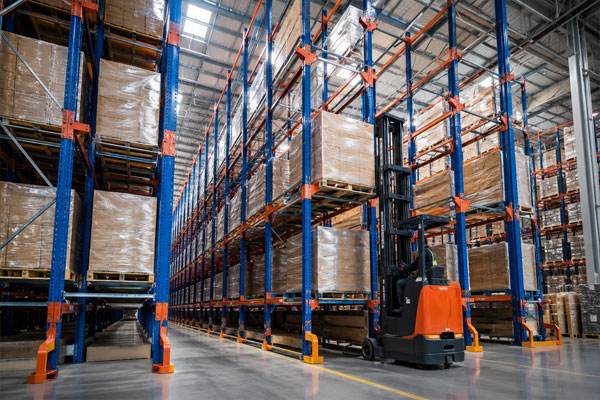
A drive-in racking system is a type of pallet racking where the forklift drives into the rack itself to load and unload pallets. The pallets rest on horizontal rails, and the lanes can be many pallets deep. It is a high-density storage solution used when you have many pallets of the same SKU.
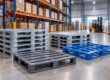
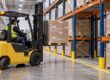
The forklift lifts the pallet slightly above the rail level and drives straight into the lane. The pallet (which can include heavy-duty metal pallets for heavier loads) is lowered onto the rails, and the forklift comes out. This is called LIFO (Last In, First Out) stock rotation.
How Does a Drive-In Racking System Work?
The design of drive-in racking is made up of:
- Upright Frames: Strong vertical columns on both sides of the lane that carry the full weight of the pallets.
- Top Beam Connectors: Connect the two frames at the top for safety and stability.
- Pallet Rails: Horizontal bars on both sides at each level that hold the pallet edges.
- Floor Rails (Optional): Bottom rails that guide the forklift straight into the lane.
- End Protectors & Guide Angles: Protect the rack from forklift hits at the entry point.
The forklift lifts the pallet slightly above the rail level and drives straight into the lane. The pallet is lowered onto the rails, and the forklift comes out. The next pallet is placed behind it, and so on. When unloading, the forklift pulls out the last pallet first.
Key Benefits of Drive-In Racking System
Drive-in racking is not for every warehouse, but where it fits, the benefits are big.
- Very High Storage Density: You can store up to 75% more pallets in the same floor area compared to selective racking.
- Fewer Aisles Needed: Less forklift travel and more space for storage.
- Lower Cost per Pallet: When storing many pallets of the same SKU, the cost per pallet stored is lower.
- Works Well for Cold Storage: Less air volume to cool, which saves energy.
- Strong and Stable: Engineered as a heavy duty racks system, the robust frames and rails make the setup completely safe for massive loads.
- Custom Depths: You can design lanes from 2 pallets deep to 10+ pallets deep.
Common Applications of Drive-In Racking
You will see drive-in racking in many industries across India.
- Cold Storage Warehouses: For fruits, vegetables, dairy, meat, and frozen foods where air space is expensive to cool.
- Food and Beverage Industry: For storing bottled drinks, packaged food, and grains in large quantities.
- Bulk Goods Storage: For raw materials like sugar, cement bags, steel coils, and chemicals.
- Textile Warehouses: For storing rolls of fabric or finished garments in large lots.
- Automobile Parts Bulk Storage: For tires, batteries, and similar parts stored in big volumes.
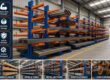
Note: Drive-in systems are built for uniform pallets. If your facility stores long, awkwardly shaped goods (like timber or pipes), a cantilever rack is a better fit. Conversely, for lightweight goods requiring manual picking, slotted angle racks are highly recommended.
Problems Solved by Drive-In Racking
Drive-in racking solves some of the most common warehouse problems.
- Problem: The warehouse is full and there is no space to add more pallets.
Solution: Drive-in racking adds up to 75% more storage in the same floor area. - Problem: Cold storage electricity bills are very high.
Solution: Tighter storage means less air to cool, so power bills drop. - Problem: Many pallets of the same SKU sit on the floor, blocking movement.
Solution: Pallets go vertical and deep, freeing the floor for forklifts. - Problem: The business does not need direct access to every pallet.
Solution: Drive-in racking trades direct access for higher density.
Price of Drive-In Racking in India
The price of a drive-in racking system depends on lane depth, height, and load capacity. Here is a simple price guide:
| Rack Height | Lane Depth | Approx. Price per Sq. Ft. |
|---|---|---|
| 3 to 4 meters | 2–4 pallets | ₹750–₹950 |
| 4 to 6 meters | 4–6 pallets | ₹950–₹1,150 |
| 6 to 9 meters | 5–8 pallets | ₹1,100–₹1,300 |
| Above 9 meters | 8–10+ pallets | ₹1,300–₹1,400+ |
Prices include design, supply, and installation.
Selective Pallet Racking vs Other Racking Systems
It helps to compare selective pallet racks with other common systems before you decide. Depending on your available vertical space and picking method, you might also want to evaluate a multi-tier racking system alongside these bulk storage options.
| Feature | Selective Racking | Drive-In Racking | Pallet Flow Racking |
|---|---|---|---|
| Access to Pallets | 100% direct access | Last-in, first-out (LIFO) | First-in, first-out (FIFO) |
| Floor Space Usage | Lower (needs more aisles) | High (deep lanes) | High (deep lanes) |
| Best For | Many SKUs, fast picking | Bulk storage, few SKUs | Date-sensitive goods |
| Cost per Sq. Ft. | ₹650 – ₹1,200 | ₹750 – ₹1,400 | ₹1,200 – ₹2,000 |
| Installation Time | Fast | Medium | Slower (has rollers) |
Conclusion
A drive-in racking system is a powerful solution for warehouses that need to store more in less space. It works best when you have a small number of SKUs and many pallets of each. Cold stores, food warehouses, and bulk goods facilities benefit the most from it.
Before choosing drive-in racking, study your SKU count, rotation method (FIFO or LIFO), and forklift type. A good racking partner will design the right depth, height, and load class for your business.
Ready to optimize your warehouse space? You can request a quote for drive-in racking today or directly contact our Ahmedabad team for personalized advice. To understand why top businesses trust us. For more insights on warehouse storage, explore more racking guides on our blog.
Frequently Asked Questions (FAQs)
A drive-in racking system is a high-density pallet storage system where forklifts drive directly into the rack lanes to load and unload pallets. Pallets are stored deep on rails.
Drive-in racking has one entry point and follows LIFO (last in, first out). Drive-through racking has two entry points and follows FIFO (first in, first out).
The main benefits are high storage density (up to 75% more pallets than selective racking), less aisle space, and lower cost per pallet stored.
It is used in cold storage, food and beverage warehouses, bulk goods storage, and any warehouse that stores few SKUs in large quantities.
Drive-in racking in India costs between ₹750 and ₹1,400 per square foot, depending on height, depth, and load capacity.
Yes, drive-in racking is widely used in cold storage. It reduces the air volume, which saves power, and the racks work well in low temperatures when properly designed.
Yes, a standard counterbalance or reach truck can be used. However, drivers must be trained for tight lane entry, and the lane width must match the forklift model.