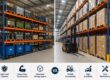
Pallet Racking Systems for Inventory Management
Running a successful business is about more than just making a great product; it is also about storing and moving that product efficiently. Proper inventory management is incredibly important for warehouses and businesses of all sizes..
To solve these daily headaches, companies must upgrade how they store their goods. This introduces the essential role of a Pallet Racking System. By moving away from messy floor storage and using smart, heavy-duty shelving, businesses can completely transform their operations. In this detailed guide, we will explore exactly how these industrial storage systems work and how they drastically improve your daily inventory management.
What is a Pallet Racking System?
To understand how you can improve your warehouse, you first need to know what this equipment is. A Pallet Racking System is a heavy-duty storage rack system specifically built for palletized goods. Instead of leaving wooden pallets full of boxes on the floor, these strong metal structures allow you to store them high up in the air on safe, secure shelves.
These systems are heavily used in warehouses, massive manufacturing factories, and busy logistics centers all over the world. They are designed to hold thousands of pounds of weight safely. The main purpose of an Industrial racking system is that it helps store goods vertically and systematically. Instead of expanding your building to get more floor space, you simply build upward. This greatly improves space usage and allows forklifts quick access to any pallet in the building.
Why Inventory Management Matters
Before we look at the racks themselves, we must understand why managing your stock properly is so critical to your business success. Good inventory control offers several major benefits:
Types of Pallet Racking Systems
Every business has different needs. Therefore, there are several different styles of racking available to fit your specific warehouse flow:
- Selective pallet racking: The most common type. It allows direct access to every single pallet at any time. It is great for warehouses with many different types of products.
- Drive-in racking: Forklifts physically drive into the storage lanes. This is excellent for storing massive amounts of the exact same product.
- Double deep racking: Pallets are stored two rows deep. This saves aisle space but requires a special forklift with an extendable reach.
- Push back racking: Pallets are placed on wheeled carts that slide back when a new pallet is added. It is highly efficient for LIFO storage.
- Mobile racking: The shelves are mounted on heavy tracks on the floor and roll together to save space, opening an aisle only when needed.
Heavy duty pallet racking: Extra-thick steel racks designed specifically for extremely heavy items like metal coils or heavy machinery parts.
How Pallet Racking Systems Improve Inventory Management
A reliable Inventory storage system completely changes how your team works every day. Here is a detailed look at exactly how upgrading your warehouse shelving solves your biggest inventory problems.
Organized Product Storage
The biggest benefit of these racks is that they provide easy category-wise arrangement. You can assign specific rows and shelves to specific products. For example, electronics can go in aisle one, while clothing goes in aisle two. This organization stops the confusion of mixed pallets sitting in the middle of the floor.
Better Stock Visibility
When items are stacked three or four levels high on Warehouse storage racks, you get incredible stock visibility. Managers and forklift drivers can simply look down an aisle and do a quick item location check. You can easily read the barcode labels on the front of the pallets, ensuring no products get lost or forgotten in a dark corner.
Faster Loading and Picking
Time is money in an Inventory management warehouse. Because every pallet has its own specific place on the shelf, a forklift driver can drive directly to it, lift it, and move it to the shipping truck. This targeted approach saves worker time. They do not have to move three pallets out of the way just to reach the one they actually need.
Maximum Space Utilization
Floor space is very expensive. A racking system gives you maximum space utilization because it uses vertical warehouse space. By stacking pallets four or five levels high towards the ceiling, you can easily triple or quadruple the amount of goods you store in the exact same room.
Reduces Product Damage
When pallets are left on the floor, they get bumped, kicked, and run over by machinery. Stacking pallets directly on top of each other crushes the boxes on the bottom. Racking provides safe pallet storage. The heavy metal beams carry all the weight, meaning the delicate boxes on the bottom shelf are completely protected from the heavy pallets above them.
Supports FIFO / LIFO Methods
Good inventory control relies on smart stock rotation. Racking perfectly supports these methods. FIFO (First In, First Out) ensures older stock is picked first, which is vital for food and medicines. LIFO (Last In, First Out) works well for non-perishable goods. Racks give you better stock rotation control by allowing you to load and unload pallets in a specific, planned order.
Easier Stock Audits
Every year, businesses must count their inventory for tax and accounting reasons. This process is a nightmare if your warehouse is messy. Neatly organized Pallet storage racks make for much easier stock audits. Workers can walk down the aisles and perform faster counting and checks, finishing a job in hours that used to take days.
Pallet Racking vs Floor Storage
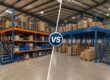
To clearly understand the value of an upgrade, let us compare a modern racking system to traditional floor storage.
| Feature | Pallet Racking System | Floor Storage |
| Space Utilization | Excellent. Uses all vertical air space to the ceiling. | Very poor. Only uses the flat ground space. |
| Product Access | Fast and direct access to specific pallets. | Slow. Requires moving other pallets out of the way. |
| Damage Risk | Very low. Shelves support the heavy weight. | Very high. Bottom boxes get crushed easily. |
| Warehouse Organization | Highly organized, clean, and neatly labeled. | Often messy, confusing, and hard to navigate. |
| Safety Level | High. Keeps aisles clear for workers. | Low. Creates tripping and driving hazards. |
Industries Using Pallet Racking Systems
- Warehouses: General storage facilities holding goods for third-party businesses.
- E-commerce companies: Massive fulfillment centers picking and packing thousands of online orders daily.
- Manufacturing plants: Factories that need to store raw materials safely before building products.
- Retail distribution centers: Supplying supermarkets and shopping malls with their daily stock.
- Cold storage units: Deep freeze warehouses storing food, where maximizing expensive cold space is critical.
- FMCG businesses: Fast-Moving Consumer Goods companies dealing with highly packaged food and household items.
How to Choose the Right Pallet Racking System
- Product weight: You must calculate exactly how heavy your heaviest pallets are to ensure you buy a system strong enough to hold them without bending.
- Warehouse size: Measure your ceiling height and floor space to see how many racks you can comfortably fit.
- Forklift movement space: You must leave aisles wide enough for your specific forklifts to turn around safely without hitting the metal posts.
- Stock rotation method: Decide if your products expire (requiring FIFO) or if they do not expire (allowing LIFO), as this dictates the type of rack you buy.
- Future expansion needs: Buy a system that can be easily expanded or added onto as your business grows larger over the next few years.
- Safety standards: Always ensure the racks meet strict industrial safety certifications to protect your workers from dangerous collapses.
FAQs
It is a heavy-duty, industrial steel shelving structure used in warehouses to safely store wooden pallets loaded with products in multiple vertical levels.
It improves management by organizing products neatly, making them easy to find, speeding up the loading process, and preventing old stock from being lost and expiring.
They are heavily used by e-commerce fulfillment centers, large retail distributors, manufacturing factories, cold storage food plants, and general logistics warehouses.
FIFO stands for “First In, First Out.” It is an inventory method where the oldest stock is picked and shipped first, which is extremely important for items with expiration dates.
Yes, dramatically. By moving your storage upward into the empty air space toward the ceiling, you can often triple your storage capacity without renting a larger building.
You should choose based on the physical weight of your pallets, the turning size of your forklifts, your available ceiling height, and how quickly you need to rotate your inventory.
Conclusion
Managing a warehouse does not have to be a stressful, chaotic job. By upgrading to a high-quality Pallet Racking System, you take total control over your inventory. These intelligent storage systems offer incredible organization, massively increase your picking speed, provide excellent safety for your workers, and deliver major cost-saving benefits by maximizing your expensive floor space. When everything has a proper place, your business runs faster and your customers stay happier. We highly encourage professional storage planning to ensure you get the perfect setup for your exact business needs.